Black Women Deserve the Soft Life
Parts of the internet nearly fell to pieces with the announcement and release of Netflix’s With Love, Meghan, Meghan, the Duchess of Sussex’s new lifestyle show.
Parts of the internet nearly fell to pieces with the announcement and release of Netflix’s With Love, Meghan, Meghan, the Duchess of Sussex’s new lifestyle show. Comment sections resembled battlefields with the commentary reflecting both blatant misogynoir and racism, as well as the less obvious but equally insidious stereotypes of Black women.
The discussion never centered on the show itself or whether commenters liked it or not. That would be a valid conversation. Rather, the comments attacked Meghan for the show’s content. “She’s so unrelatable,” one user wrote. “She doesn’t talk about anything. Like, where are the causes?” another user wrote.
What comments like those assume is that Black women wouldn’t relate to a woman who is enjoying herself, who has time for hobbies, who lovingly dotes on her friends, whether she is nervously making beeswax candles with them or a delicious spread for them.
These comments also assume that Black women do not have any parts of our lives that aren’t in active service, assuming that the only thing that is interesting, noteworthy, or humanizing about a Black woman is how she serves others.
These comments are simply assumptions that miss, whether accidentally or intentionally, the multi-faceted, multi-dimensional experience of Black womanhood. They reflect both ignorance and arrogance by telling Black women who they can be. They attempt to restrict who she is and attempt to control who she can be by actively policing elements about her.
So, let’s clear this up: Black women do not exist to constantly be in service. Contrary to popular belief, Black women are not social justice mules. We do not exist to come to the rescue at the world’s beck and call. By believing that everything Black women do should somehow be in service to other people reduces her humanity, turning her into
Black womanhood is expansive. There is enough room for every Black woman to exist fully as herself and all that she is within Black womanhood. There is room for her to change, to shift, to develop, to refine, to redefine, whatever she chooses. That includes room for Black women of all types, including those of us who are embracing softer lives.
That softer life for Black women is not a trend. Unlike popular culture, which is aesthetic-obsessed and trend-driven, Black women embracing a softer life is not an aesthetic nor a trend. It is a statement of humanity.
It is a direct rebuke of stereotypes against Black women. The “strong Black woman”, for one such stereotype, did much harm. This stereotype plays on the “strength” exhibited by Black women. Strength to care for her family, strength to care for her community, strength to work and never complain. This stereotype often reduces Black women’s humanity to how they show up to rescue, restore, or clean up. It also does not consider that Black women had to exhibit strength for their own survival. In an oppressive culture, Black women had to be strong for their own and their community’s survival. Turning the necessary strength needed for that survival into a humanity-reducing stereotype has only ever been harmful to Black women.
Then there is the stereotype of the "angry Black woman", another stereotype that dehumanizes. This one, however, is meant to show rage, not as an emotion, but as the disposition of Black women. It’s meant to take the humanity out of her anger because, well, she’s just angry all the time. That is just who she is. Never mind the reasons for her anger or that her anger is righteous. To combat this, Black women often stifle or suppress any outward expression of their anger. This is proven to wreak havoc on Black women’s physical and emotional health.
By adopting a “softer” life, it combats both the “strong Black woman” and the “angry Black woman" stereotypes. It says, ‘Yes, I can be both strong and soft.’ It says, ‘I can care for my community AND regulate my nervous system.’ It says, ‘I can express any emotion that any other person can because I too am a person.’ It says, ‘I know my worth does not lie in how I work, or how useful I am to others, but in my intrinsic humanity.’
This softer life is not only seen in the Duchess of Sussex. It is seen when one of the greatest athletes of our time, Simone Biles Owens, took time to address her mental health. It is seen when rappers such as Meg Thee Stallion and Doechii create spaces to discuss things like depression and anxiety.
It is a reminder that “self-care” goes beyond candles, baths, and expensive retreats. It is a reminder that self care was and still is a revolutionary act with the phrase originating with Black women. In the Cancer Journals of Audre Lorde, she says “Caring for myself is not self-indulgence, it is self-preservation, and that is an act of political warfare.” This softer life of self care goes beyond the trends of indulgence, it is a proclamation that Black women are here, are human, and deserve care and joy. It’s seen in saying ‘no’ to prioritize our own wellbeing. It’s seen in courageous conversations where Black women enforce our boundaries. It’s seen when Black women prioritize our own humanity.
Black women deserve the soft life. Not the one of just instagrammable aesthetics, but an embrace of our own humanity.
-
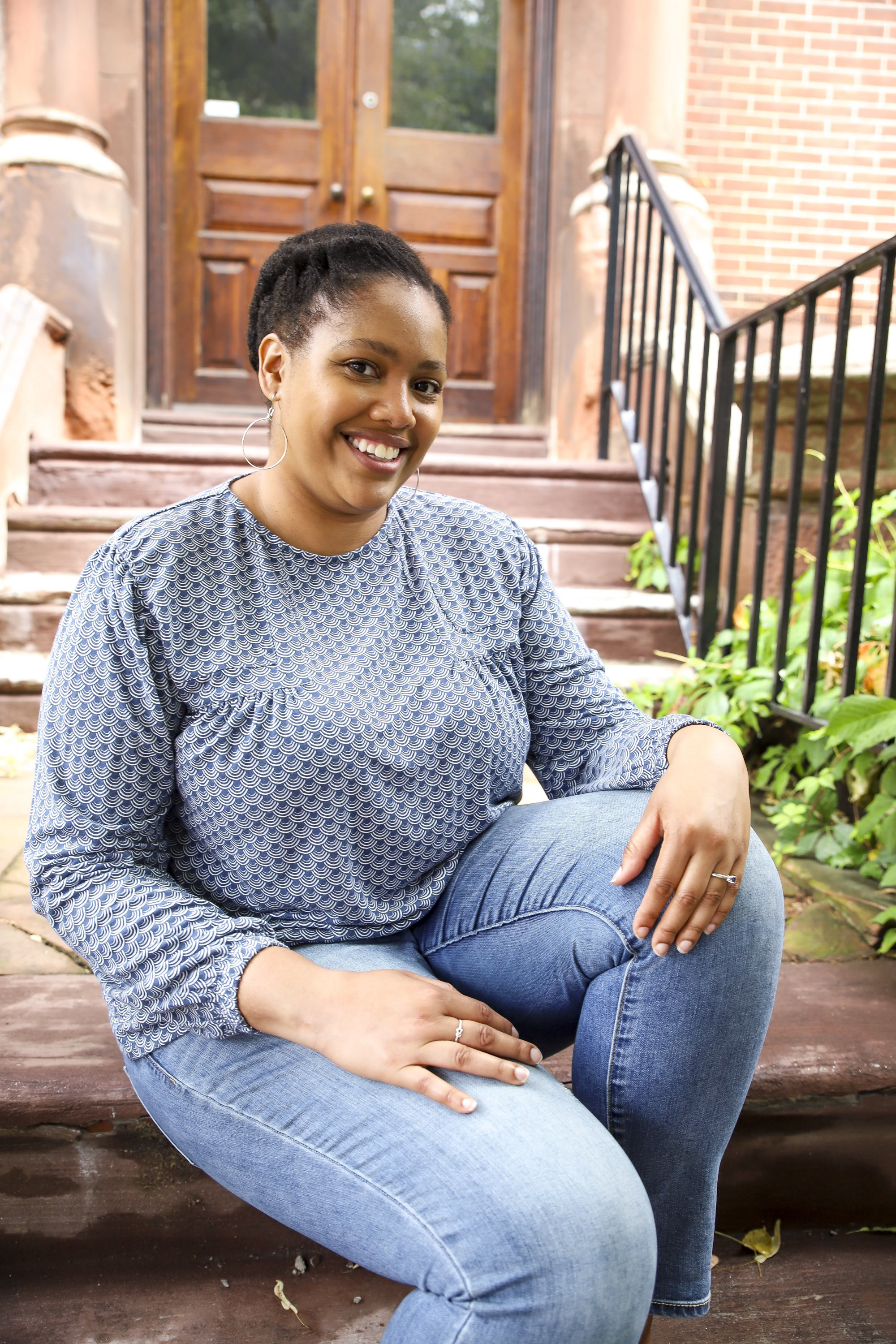
Whitney Roberts
Whitney Roberts is a Philadelphia writer, podcaster, and content creator featured by the NAACP, Wired, NBC, and more. She contributes to outlets like TheRoot and NPR, amplifying diverse voices and stories.