How Philly writer Karas Lamb guides listeners through cultural landscapes
“Most writers only pay attention to the leaves; new leaves appear every year. Karas is connected to the roots and the soil.”
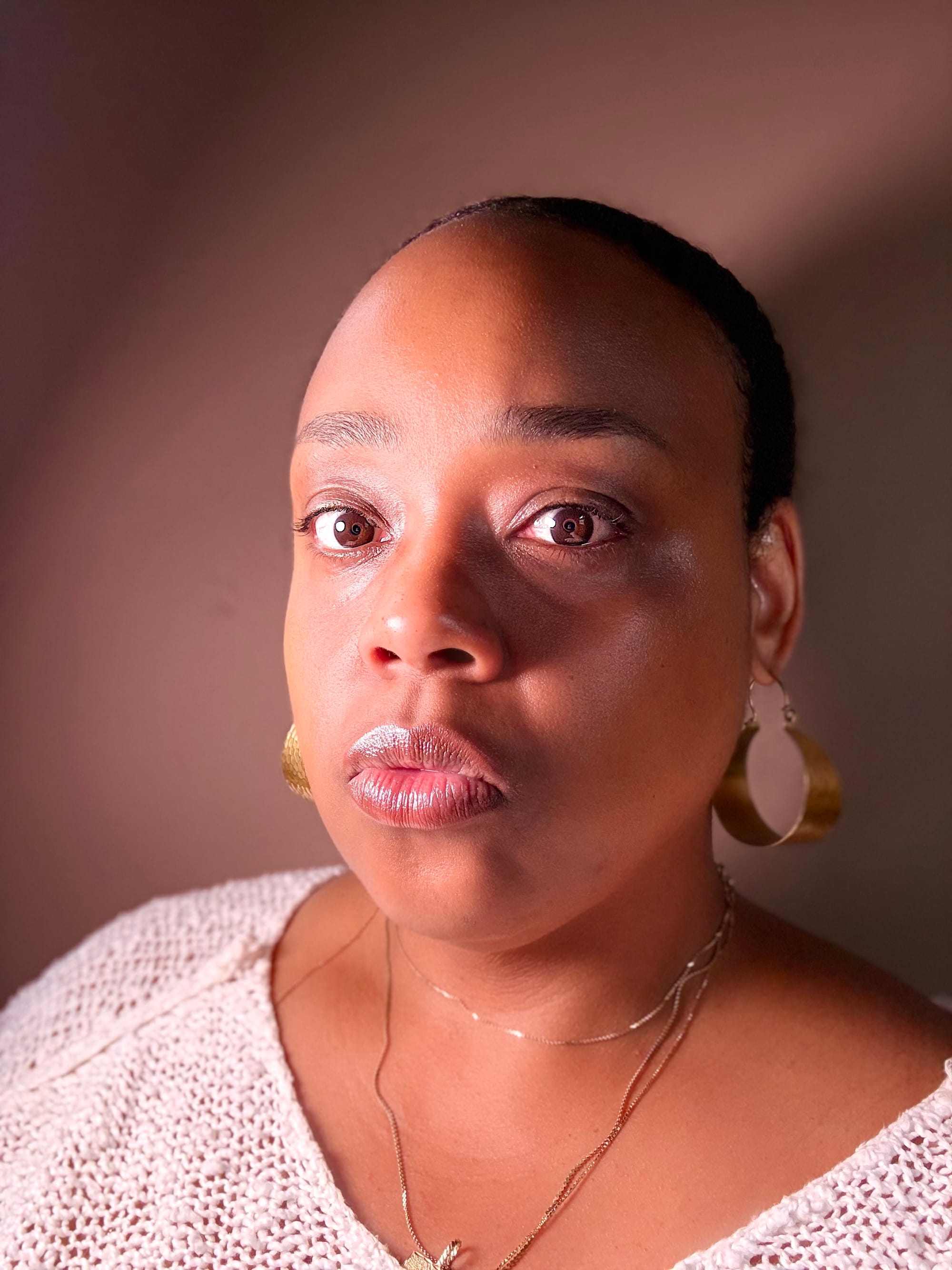
Before her bylines appeared in Pitchfork, Entertainment Weekly, or Wax Poetics, Karas Lamb was a kid in West Philadelphia learning how to listen. She grew up in a working-class home surrounded by her parents’ records, cassette singles, and the steady hum of ’90s Black sitcom soundtracks. Outside, the neighborhood offered its own curriculum: R&B drifting from open windows, passing cars shaking the curb with bass, and the evolving vocabulary of hip-hop echoing down the block.
She didn’t yet have language for any of it; she just understood its pull. “Music was always around,” she says. “I didn’t know how to name what I was hearing, but I knew what it felt like.”
That sensibility, of sound as emotion, as memory, as lineage, that would shape everything that came after.
Lamb’s editorial career began with Okayplayer, one of the earliest digital hubs for hip-hop discourse. She arrived first as a message-board regular and grew into one of the publication’s most relied-upon voices. Through her long-running Mixtape Mondays column, she championed selectors, producers, and artists whose names hadn’t yet broken through the algorithmic churn.
DJ and producer Matthew Law, who first befriended Lamb while visiting Cue Records on South Street, remembers her early clarity. “I’d swing by the shop just to dig for vinyl,” he says. “We’d end up talking for hours. Karas had encyclopedic recall: Philly soul, TV themes, rap history. When she writes, the whole lineage shows up.”
Part of the trust Lamb earned came from how she centers people, not trends. Her interviews and profiles were never about “discovering” artists; they were about honoring the ecosystems they came from. Writer and organizer Lenée Voss puts it succinctly: “She would never take a check to write a favorable review. She’s not telling people what to consume; she’s helping listeners understand what they’re hearing.”
Looking back in the archive, an example of what makes Lamb’s ear so special can be seen in 2017 review of SZA’s Ctrl. Lamb quickly detailed what made the work an instant classic without flattery, and without calling it that:
“Having survived an arduous recording process and SZA’s short-lived social media meltdown about it, Ctrl is a sight for eyes made sore simply from trying not to blink and miss what was expected to be a monumental project from the lone songbird signed to Top Dawg Entertainment. SZA promised an emotive and self-reflective release back when Ctrl was still entitled A. What surfaced on June 9th was a near-perfect confessional that found fans bowled over by the maturation of Solana Rowe’s signature sound, her generosity of spirit, and an effortless knack for the kind of candor that conjures broken car windows, cigarette burns, revenge sex, stiff middle fingers, and plenty of tears.”
The depth of Lamb’s listening becomes even clearer when viewed through the artists she writes about. When Lamb wrote the liner notes for Elsa Nilsson’s 2023 album Pulses, a composer and flutist, saw their collaboration as a rare meeting of frequencies.
“Karas sees the architecture underneath the music,” Nilsson says. “She doesn’t just hear melodies; she hears the emotional physics holding everything together.”
In the Pulses liners, Lamb detailed Dr. Maya Angelou’s delivery of her poem “On The Pulse of The Morning” at the 1993 inauguration of Bill Clinton, describing the moment as not just a mark of a shift in the country, but as a sonic event that reverbs through the consciousness of man. For Nilsson, who often works in the space between political urgency and spiritual reflection, Lamb’s writing felt less like critique and more like translation, an articulation of intention she didn’t yet have words for.
“Being written about can make you brace for misunderstanding,” Nilsson says. “With Karas, you feel seen. She doesn’t impose meaning; she reveals it.”
Producer and composer Corey Bernhard, now part of the Late Show with Stephen Colbert band, recalls a similar experience when Lamb interviewed him for The Revivalist in 2012. “It was my first real interview,” he says. “I remember thinking, Wow, this person is interested in who I am and my ideas beyond just being a dope keys player.”
Lamb’s approach stood out immediately. “She wasn’t trying to put me in a box or compare me to anyone,” he says. “We laughed a lot. It felt like a dialogue, not an evaluation.”
Her coverage shifted something in him. “It gave me the confidence to take myself seriously and think beyond that gig-to-gig mentality,” he says. Lamb even recognized, before he fully did, that he was part of a broader movement linking jazz and hip-hop. “She saw the ecosystem around me.”
To Bernhard, that’s her gift: “Most writers only pay attention to the leaves; new leaves appear every year. Karas is connected to the roots and the soil.”
While most journalists avoid branded creative work for fear of compromising their credibility, Lamb entered copywriting and campaign messaging with uncommon clarity, and her reputation only strengthened.
“There are multiple timelines running at once,” she says. “Editorial lets me investigate culture. Branded work lets me meet artists where they are.”
Her guiding principle is consistent: the messaging must tell the truth, or she passes on the project. That integrity has made her an anomaly, someone who can shift between lanes without diluting her voice.
Storyteller and curator Sama’an Ashrawi sees it as a form of resistance. “She’s not doing the optimized-for-engagement thing,” he says. “She still believes in the art. And you can feel the intention in every sentence.”
Across interviews, the same pattern emerges: Lamb’s work is respected because it is rooted in care, care for the music, for the people making it, and for the culture surrounding it. Bill Johnson, who worked with Lamb at Okayplayer, notes, “She put her heart into that place. She wants to see folks win. She’s a good friend before she’s anything else, and that shows up in the writing.”
Voss frames Lamb’s sensibility through the diasporic concept of Sankofa, reaching back to gather what must be carried forward. “Karas’s writing is illumination,” she says. “She’s tracing where the music comes from and what it means that we’re here, right now, listening to it.”
That attention to lineage underscores everything Lamb touches: columns, campaign scripts, liner notes, multi-page essays, or a single sentence about a song stuck in her head.
Lamb’s trajectory has never followed a single lane. It moves the way music does, looping back, doubling forward, evolving with each turn. Through journalism, she excavates history. Through
branded work, she shapes narrative. Through her own creative practice, she interrogates the emotional undercurrent of sound.
What remains constant is her refusal to flatten culture into content. She writes with the understanding that music isn’t just entertainment but inheritance.
“Music is a map of our becoming,” Lamb says. “I just try to trace the lines honestly.”
-
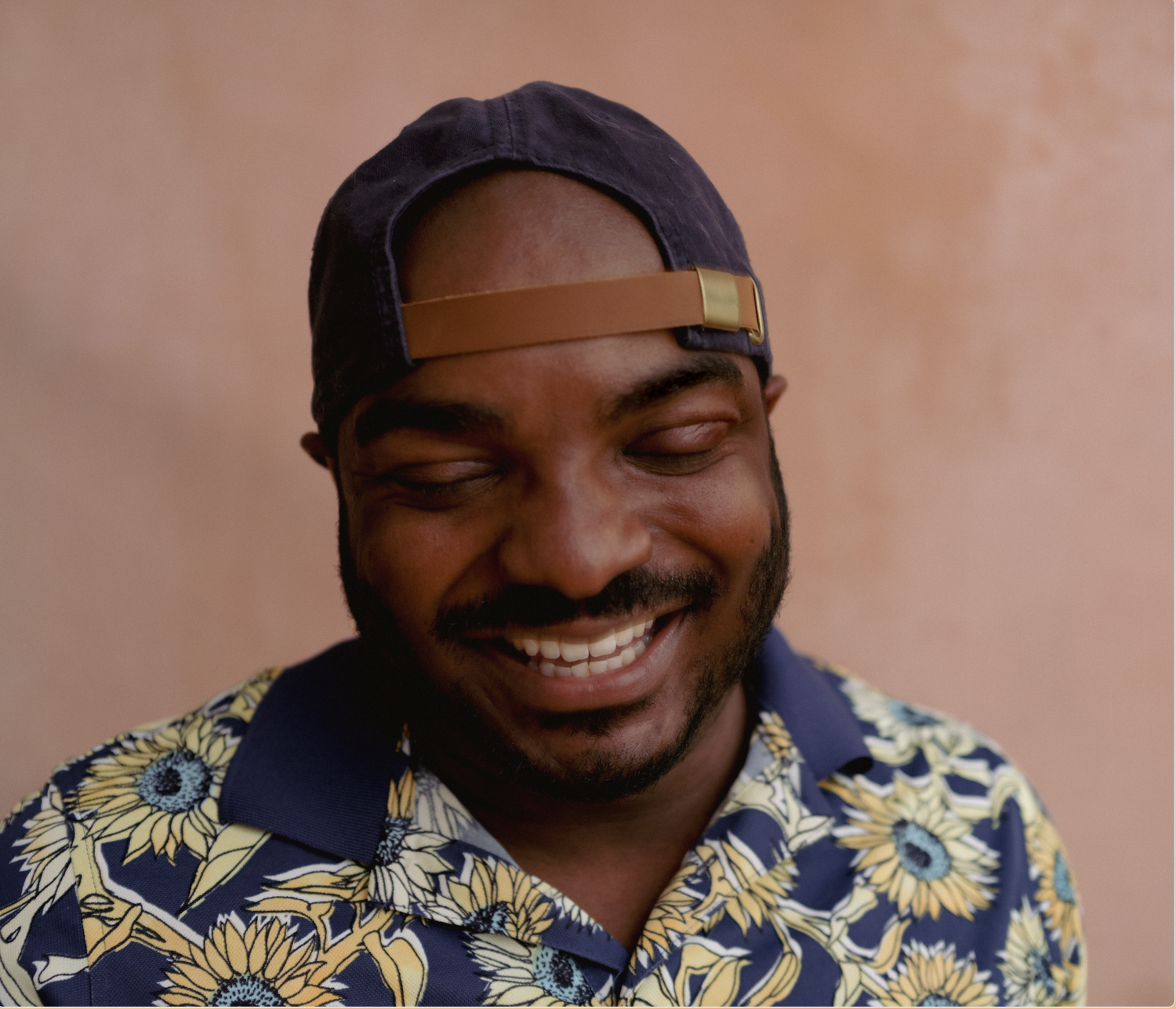
Aaron Brokenbough Jr.
Aaron Brokenbough is a Philly filmmaker, producer, and writer covering community, culture, and storytelling. He produces award-winning films and develops projects like Redefining Safety, highlighting Black, queer, and immigrant voices.